
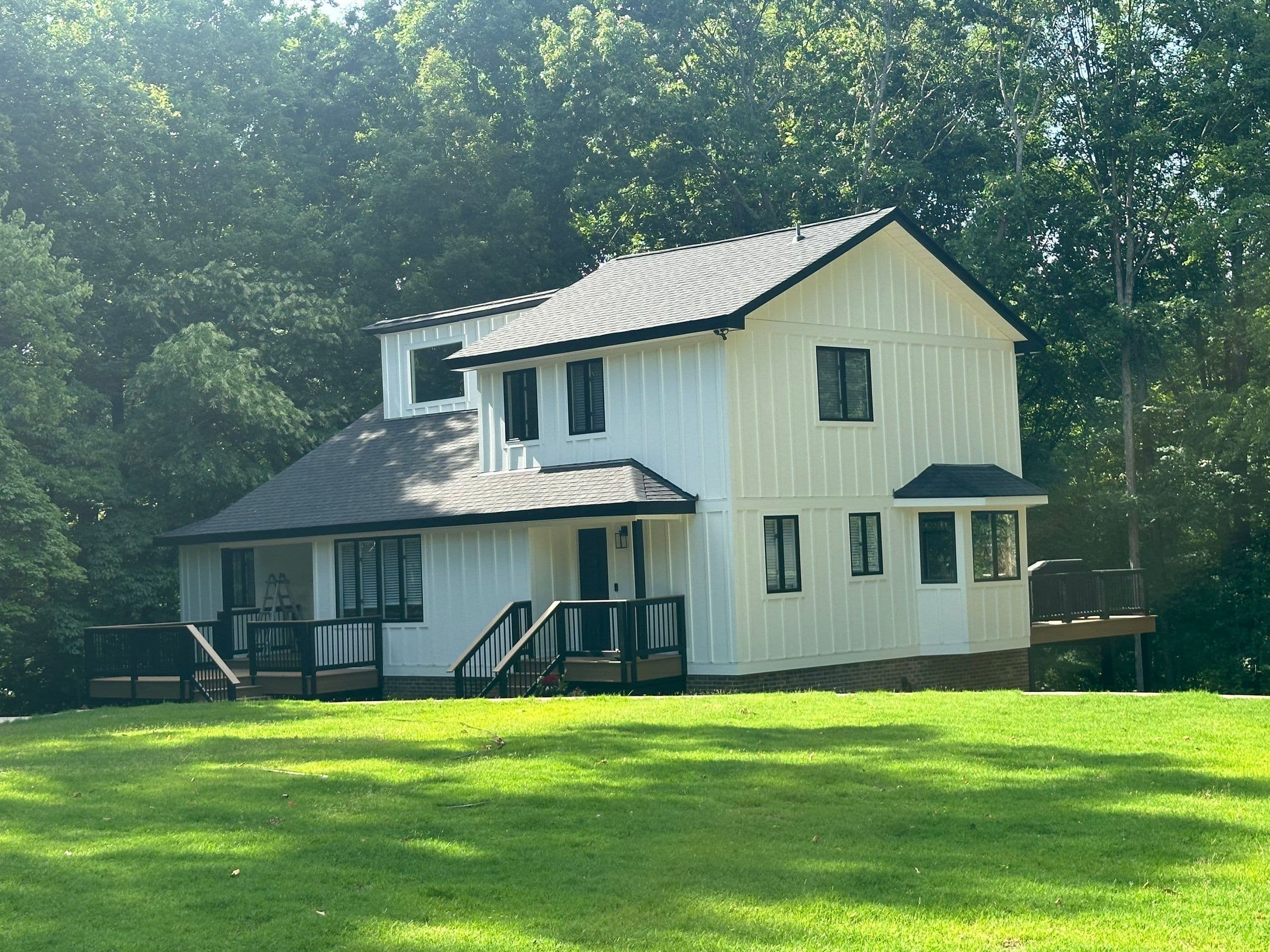
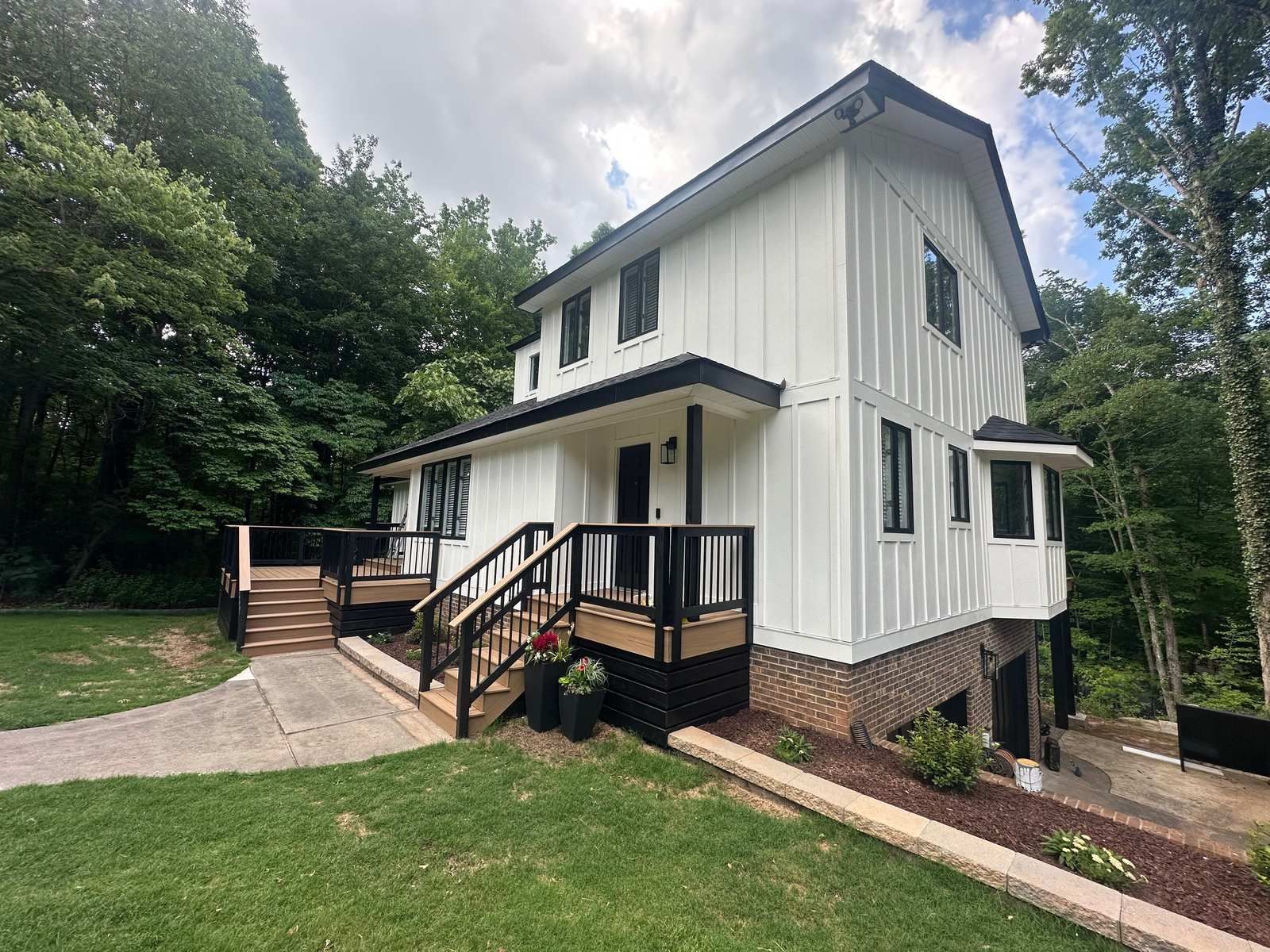
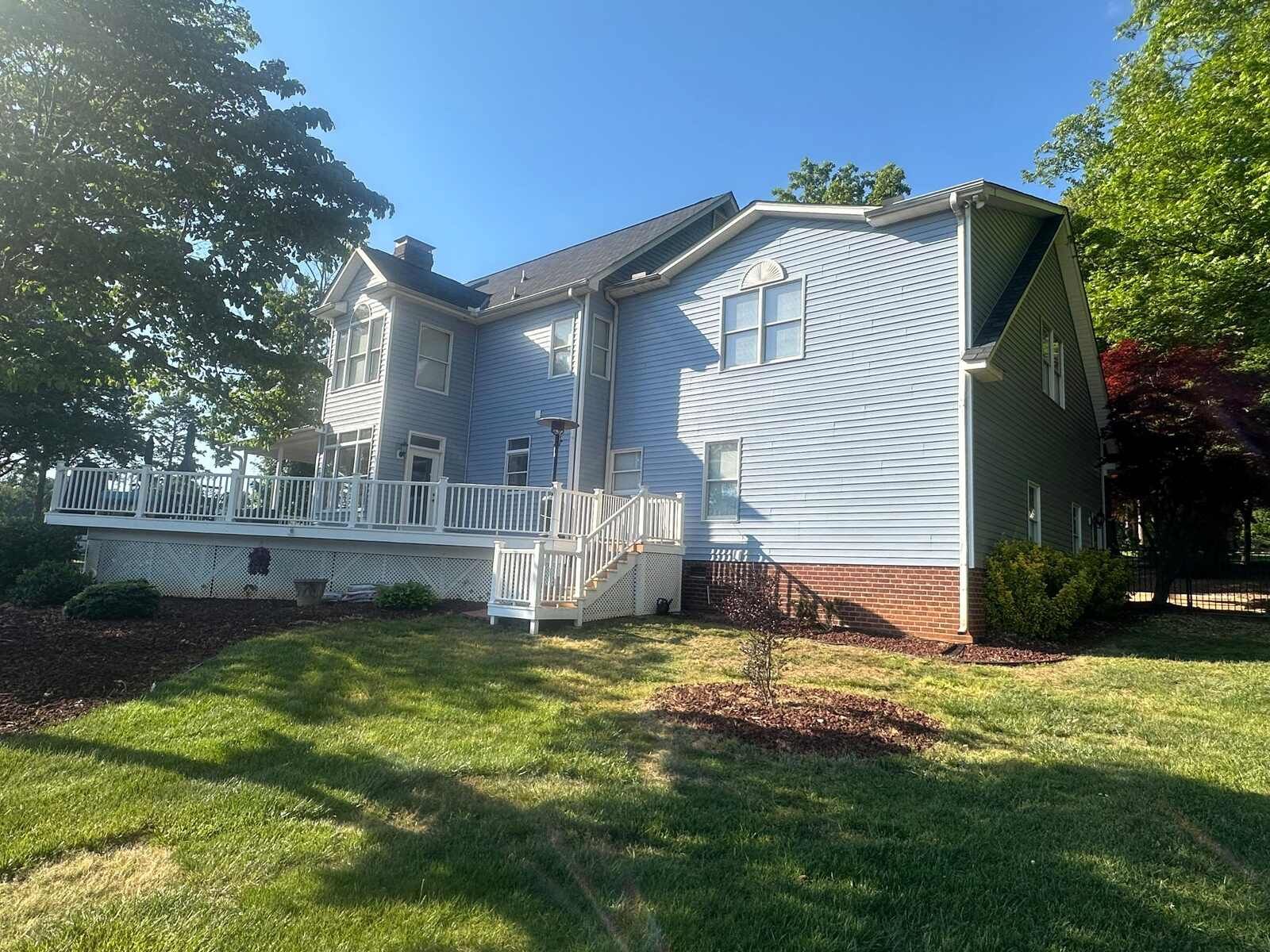
Most siding comparisons online are written by someone selling one of the two. We install both James Hardie fiber cement and quality vinyl on Charlotte homes, and we have put each on real houses in the last year: a full James Hardie board-and-batten transformation in southwest Charlotte, and a vinyl replacement on a Lake Norman home where the sun had baked out the old siding. So here is the comparison the way we would explain it standing in your driveway.
Quick answer
Fiber cement is the more durable, better-looking, longer-lasting choice for Charlotte homes, and vinyl is the more affordable one that still does the job well when it is a quality product installed properly. Charlotte's heat cycling, humidity, hail, termites, and direct sun punish siding, and fiber cement resists all five better. Vinyl wins on upfront cost and is the right call for many homes and budgets. The wrong answer is thin builder-grade vinyl or fiber cement installed off-spec, both of which fail early regardless of the material's reputation.
How each material handles what Charlotte throws at it
Charlotte condition | Fiber cement (James Hardie) | Vinyl |
|---|---|---|
Summer heat and heat cycling | Dimensionally stable, does not warp or sag | Expands and contracts daily; quality heavier-gauge panels handle it, thin panels warp and buckle |
Direct UV on sun-facing walls | Holds finish; ColorPlus carries a 15-year finish warranty | Fades and turns chalky over time, sun-facing walls first |
Humidity and rain | Does not rot, swell, or absorb moisture when installed to spec | Sheds water well; moisture problems come from installation gaps, not the material |
Hail and impact | Resists impact; can crack under severe direct hits | Can crack or shatter when brittle from age and UV |
Termites | Nothing for them to eat | Nothing for them to eat |
Fire | Noncombustible, Class A rated | Melts and can ignite under sustained heat |
The pattern is simple. Vinyl's weaknesses are almost all about aging in the sun and heat. On a shaded elevation, quality vinyl can look good for decades. On a south-facing wall with no shade, it ages years faster than the rest of the house, which is exactly what we found on the Mooresville project: the sun-exposed vinyl was brittle and faded while the shaded brick and siding were fine.
Cost: upfront versus over the life of the siding
Upfront, vinyl costs meaningfully less. That is real and it matters. A quality vinyl replacement on the Lake Norman home came in well under what a comparable fiber cement job would have, and for that homeowner it was the right decision.
Fiber cement costs more up front. Our published guide covers James Hardie siding cost in Charlotte in detail: roughly $14 to $22 per square foot installed, with most full replacements landing between $25,000 and $50,000. The southwest Charlotte board-and-batten project, including tear-off, new sheathing, house wrap, trim, and a new gutter system, came in around $38,000.
Over the life of the siding, the gap narrows. Fiber cement lasts longer, holds its finish longer, and rarely needs replacing before the house does. Vinyl's lower upfront cost can be partly offset by replacing sun-damaged elevations sooner. Neither is a trick answer. Vinyl is cheaper to buy, fiber cement is cheaper to own for a long time, and which one matters more depends on how long you plan to stay.
Maintenance, in practice
Vinyl's reputation as maintenance-free is mostly earned. It never needs paint, and a wash handles most dirt. Its maintenance issue is not upkeep, it is aging: once panels fade or go brittle, there is no fix short of replacement.
Fiber cement needs occasional repainting if it is field-painted, on a cycle of many years, or essentially none if it is factory-finished ColorPlus. Caulk at joints and trim should be checked periodically. The tradeoff is that a fiber cement wall that gets basic care can look new for decades rather than aging out.
Curb appeal and resale
Fiber cement wins this category clearly. The deep wood-grain texture, crisp trim lines, and the board-and-batten and shake profiles read as premium from the street and photograph well in a listing. Buyers in Charlotte's competitive neighborhoods recognize James Hardie by name. Vinyl has improved a great deal, and quality panels in current colors look sharp, but it does not carry the same resale premium.
Style options
Fiber cement offers lap siding, vertical board-and-batten, shingle and shake panels, and trim profiles that let a home take on a modern farmhouse or craftsman look. Vinyl offers lap siding and some shake and vertical profiles, with a color range that has widened considerably. Either material can be made to look good. Fiber cement can be made to look expensive.
Installation matters as much as material
This is where comparisons that push one material go wrong. Both products fail early when installed badly, and both last when installed right.
Fiber cement has to be fastened, spaced, cut, and flashed to James Hardie's specifications or the warranty can be at risk. That is why we are a Proud James Hardie Alliance Contractor, trained by James Hardie on their requirements.
Vinyl has to be hung loose enough to expand and contract, with proper house wrap behind it and correct flashing at every window and door. Nailed too tight, it buckles in the first summer. Installed without new wrap, it sheds water onto a wall that cannot handle it.
On both of our recent projects the scope was the same underneath: tear off the old siding and wrap, inspect the sheathing, install new house wrap, then hang the new siding to spec. The material was different. The discipline was identical.
Who should choose which
Choose fiber cement if: you plan to stay in the home long term, curb appeal and resale matter to you, your home has significant sun exposure, you want a premium look like board-and-batten, or you are in a neighborhood where James Hardie is the expected standard.
Choose vinyl if: upfront budget is the deciding factor, you are preparing a home for sale within a few years, the siding elevations are mostly shaded, or the home's style and neighborhood suit vinyl well. Insist on a heavier-gauge panel, not builder-grade.
Either way, do not choose: the cheapest quote. On both materials, the low bid is usually missing the tear-off, the sheathing check, the house wrap, or the trim details, and those are what determine whether the siding lasts.
Get a straight comparison for your home
Bring us your house and we will price both materials honestly, tell you which one we would put on our own home in your situation, and show you real projects in each. No pressure toward the bigger ticket.
Call Top Flight Contracting at 704-269-8522 or request your free siding consultation today.