
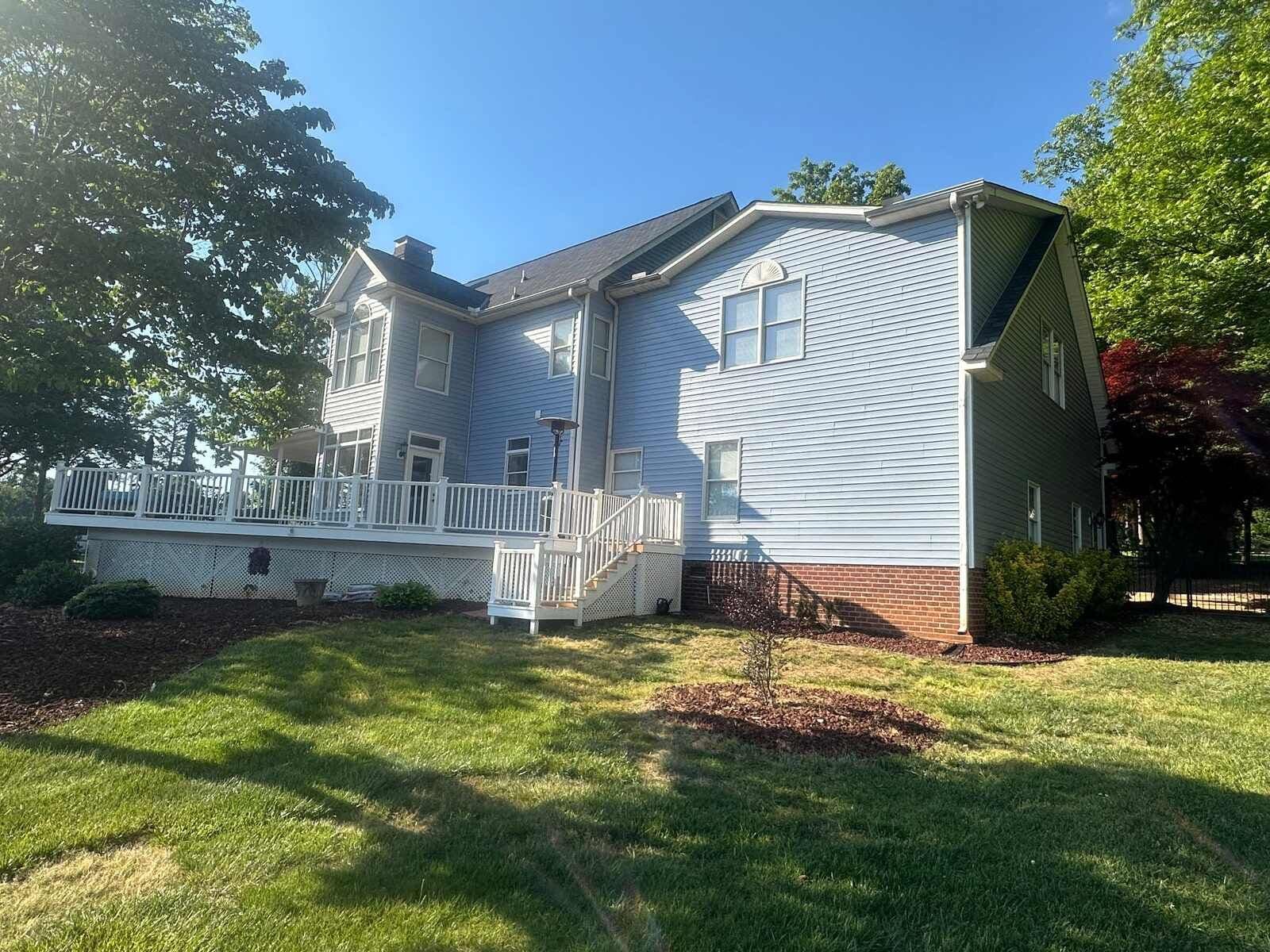
Quick answer: Direct sun is what wears out vinyl siding fastest around Lake Norman. Years of UV exposure fade, chalk and embrittle the panels on the sunniest walls until they crack, warp and work loose, while shaded walls look fine. The fix is a full replacement with new house wrap and heavier-gauge panels, not a patch.
Compare your options on our siding services page, or see why many homeowners move up to James Hardie fiber cement siding.
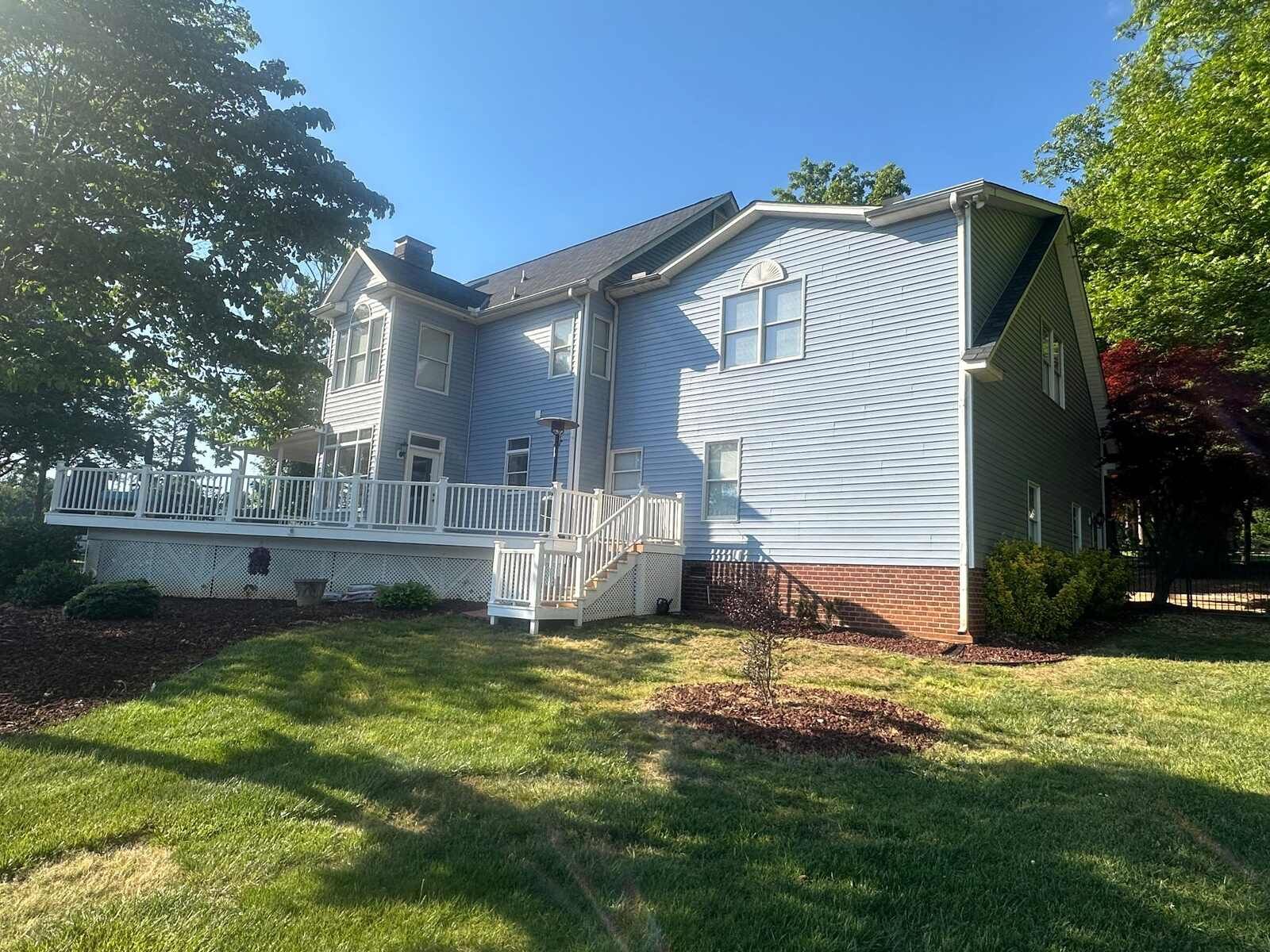
Here is something most homeowners around Lake Norman do not realize until it happens to their house: the sun can wear out your siding faster than storms do. On a recent project in Mooresville, right on the water, the vinyl elevations catching direct sun day after day had been slowly baked to the end of their life, faded, brittle, and done, while the home's brick held up fine.
We replaced the vinyl with new, heavier-gauge panels and a fresh gutter system. Here is how sun damage happens, how to spot it on your own home, and what a proper vinyl replacement looks like.
What the sun actually does to vinyl siding
Vinyl is a solid, budget-friendly siding material, but it has one natural enemy in the Carolinas: years of direct UV exposure. Sunlight breaks down the material slowly, and the side of your home that faces the strongest sun ages years faster than the rest. Over time that shows up as:
- Fading and chalking. The color washes out and the surface takes on a dull, powdery look.
- Brittleness. Sun-baked vinyl loses its flexibility. Panels that once flexed with temperature swings start to crack, split, and break, especially in winter.
- Warping and buckling. Heat cycles make panels expand and contract thousands of times. Aged panels stop returning to shape.
- Loose panels. As vinyl becomes brittle and misshapen, wind works panels loose, and every loose panel is a path for water to get behind your siding.
This is why the sunniest elevations of a home fail while shaded walls look fine. On this Mooresville project, the brick had decades of life left. The sun-exposed vinyl did not.
The fix: a full-system replacement, not a patch
Matching a few replacement panels to 20-year-old faded vinyl never looks right, and it does nothing about the aged house wrap behind it. Here is the scope we ran on this home:
- Removed all of the existing vinyl siding and the old house wrap.
- Inspected the wall sheathing underneath for hidden damage, the step where water problems get caught before they become structural problems.
- Installed new house wrap as a fresh weather barrier.
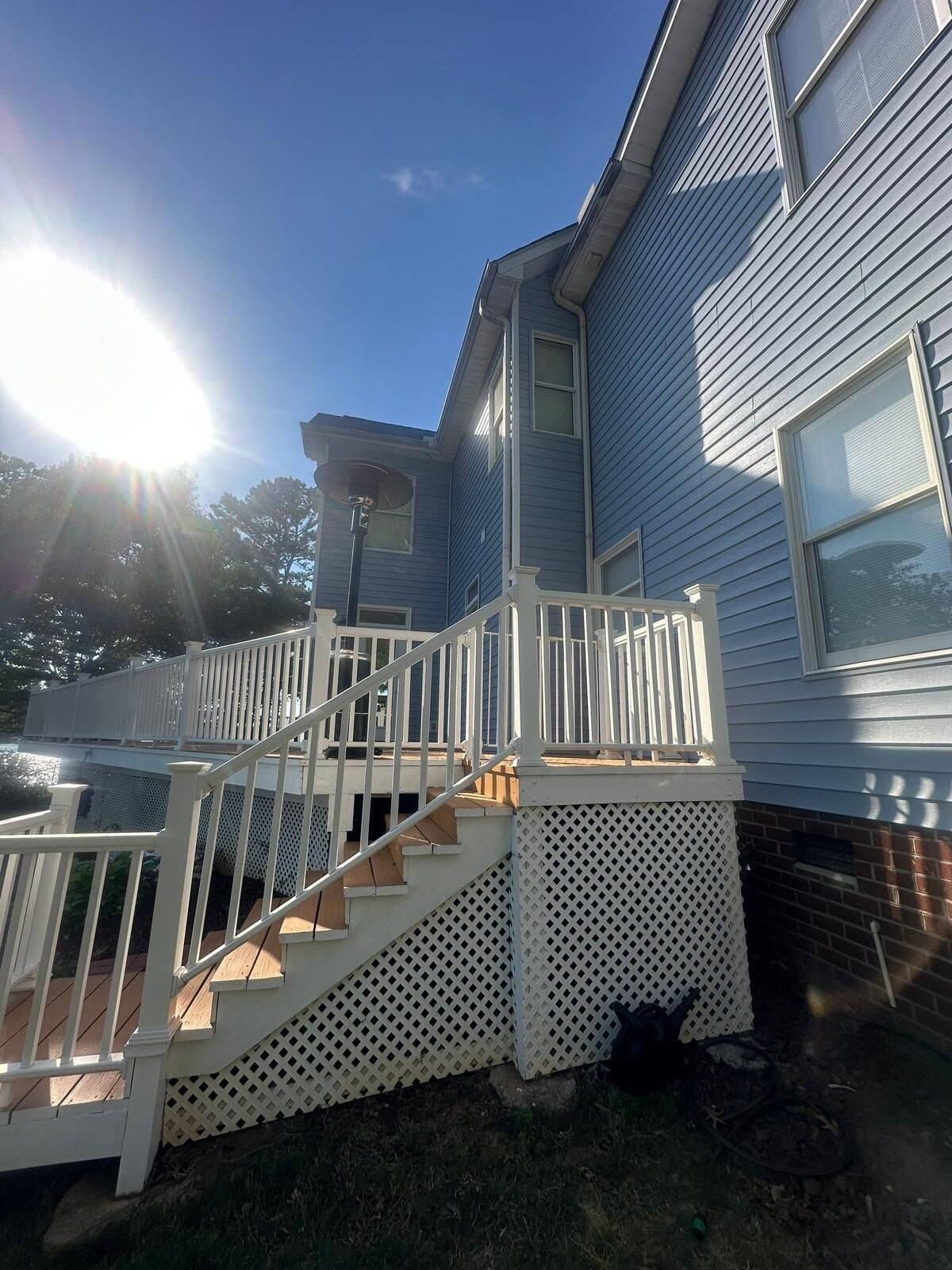
- Installed new Royal Residential Double 5 inch Traditional vinyl in Blue Grey, a heavier .042 gauge panel that resists sagging and handles heat cycles better than thin builder-grade vinyl.
- Finished with a new white gutter system, 5 inch gutters with oversized 3x4 downspouts, so roof runoff moves away from the new walls and the foundation.
- Cleaned up everything, hauled the debris, and ran a magnetic sweep for nails before we left.
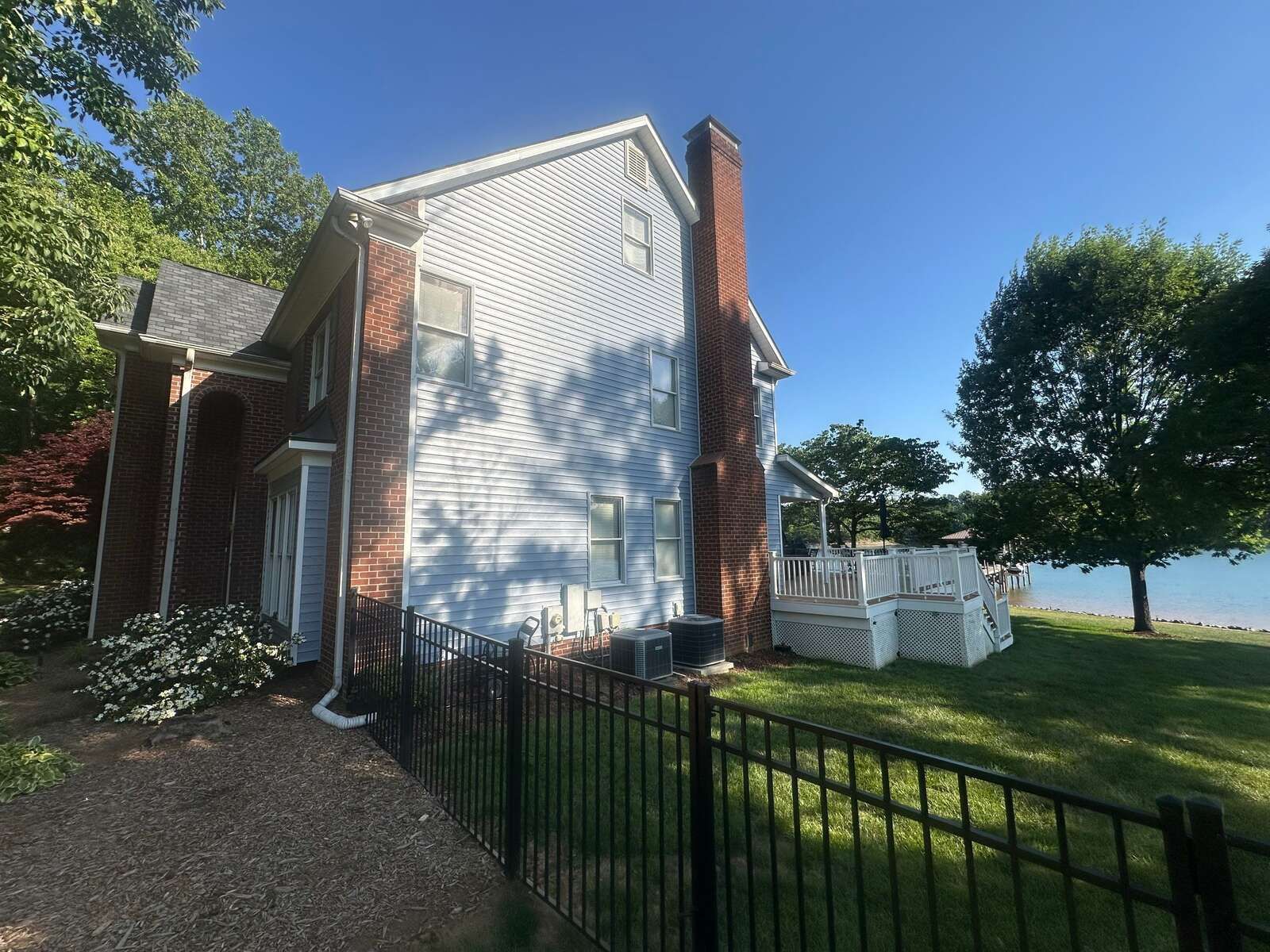
The result: a crisp Blue Grey exterior that matches the brick instead of fighting it, with a wall system that is sealed, wrapped, and ready for another few decades of Carolina sun.
How to spot sun damage on your own home
Walk to the side of your house that gets the most afternoon sun, usually the south or west face, and look for:
- Color noticeably lighter than the shaded sides of the home
- A chalky residue that comes off on your hand when you rub a panel
- Cracks, splits, or small shattered spots, often near panel edges
- Panels that look wavy or no longer sit flat
- Panels that rattle or shift in the wind
If you see two or more of these, the siding is telling you it is near the end. Catching it now means a planned replacement. Waiting usually means water gets behind brittle panels first, and then you are paying for sheathing repairs on top of siding.
Vinyl or fiber cement? An honest answer
We install both, and the right answer depends on the house and the budget. Quality heavier-gauge vinyl, like the .042 panel used on this project, is a strong value: good looks, low maintenance, and a much longer service life than the thin vinyl on many older homes. Fiber cement costs more upfront and brings a step up in durability and fire resistance. When we look at your home, we will price both honestly and tell you which one we would put on our own house in your situation. No pressure toward the bigger ticket.
Frequently asked questions
How long does vinyl siding last in North Carolina?
It varies with sun exposure and panel quality. Thin builder-grade vinyl on a sun-facing wall can be failing well before the rest of the house, while heavier-gauge panels properly installed last decades. The sunniest elevation is always the first to go, so judge your siding by its worst side, not its best.
Can you replace just the vinyl and leave the brick alone?
Yes, and that is exactly what made sense on this Mooresville home. Brick does not need replacing, so the project covered only the vinyl elevations and the gutters. When a home is vinyl on all sides, though, replacing a single wall usually creates a color mismatch you will see every day, so a full replacement tends to be the better long-term move.
Does homeowners insurance cover siding replacement?
Insurance covers sudden damage from events like wind and hail, not gradual wear from sun and age. If a storm has damaged your siding, we can inspect it, document what we find, and help you understand what a claim would involve.
How long does a vinyl siding replacement take?
Most projects like this one are measured in days, depending on the size of the wall area, what we find under the old siding, and weather. You get a clear timeline before work starts.
Get an honest read on your siding
If one side of your home is looking older than the rest, that is the sun doing its work. We serve Mooresville, Lake Norman, Huntersville, and the greater Charlotte area, and we will give you a straight answer on whether your siding needs attention now or has years left.
Call Top Flight Contracting at 704-269-8522 or request your free siding inspection today.