
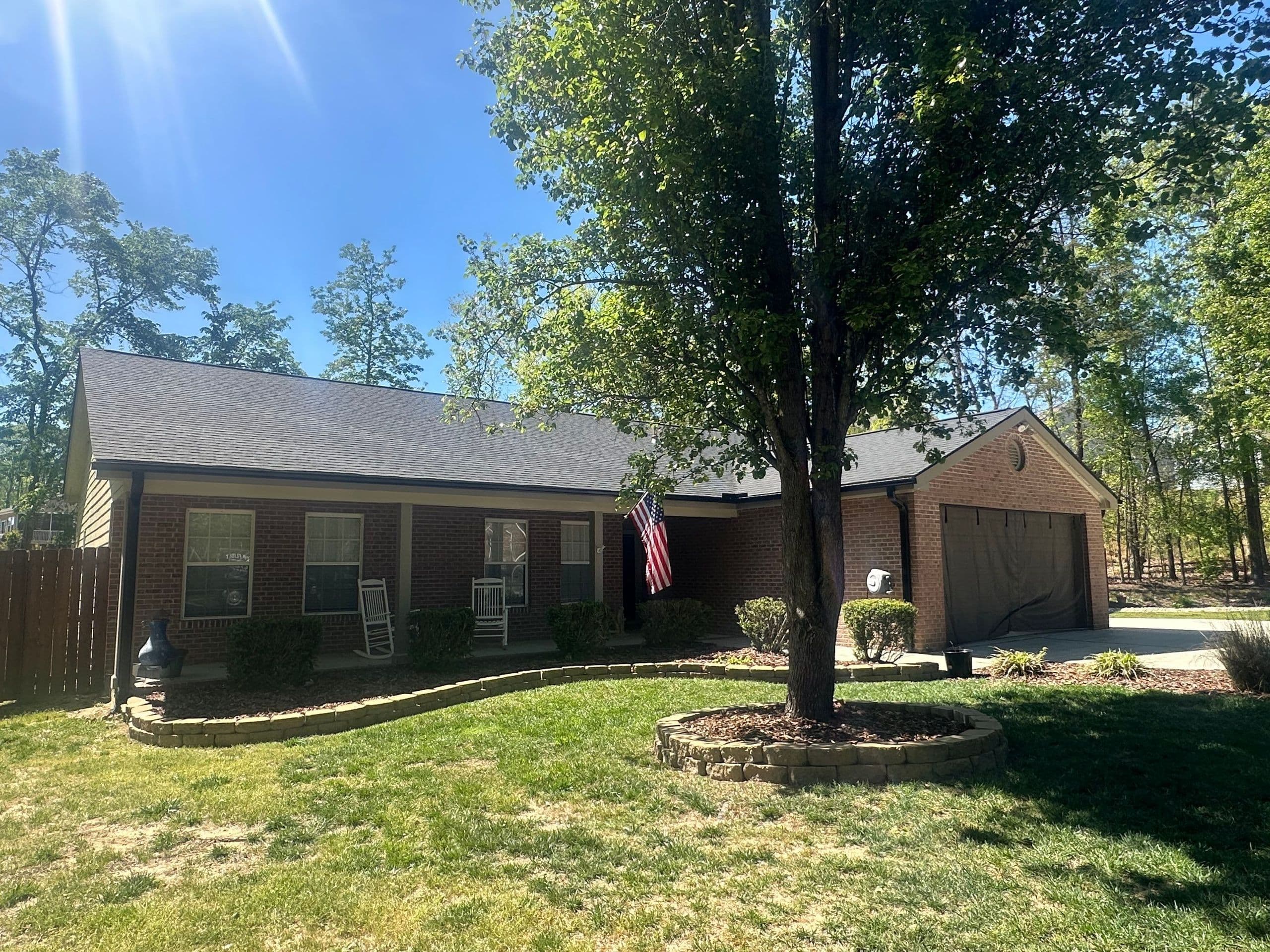
Charlotte is 200 miles from the coast, and that distance gives homeowners a false sense of security. Hurricanes do not have to make landfall nearby to reach us. They arrive as remnants: hours of driving rain, sustained wind, and gusts that find every weak spot on a roof that was fine in ordinary weather. Late summer through fall is when it happens, and the time to prepare is before the forecast, not during it.
Here is what hurricane remnants actually do to roofs in the Piedmont, what is worth doing now, and what to check after the storm passes.
Quick answer
Hurricane prep for a Charlotte roof comes down to six things: clear the gutters, trim what hangs over the roof, fix any loose or lifted shingles now, seal and check flashing at every penetration, photograph your roof while it is dry, and know your shutoffs and have tarps ready. Remnant storms in the Piedmont bring long-duration rain and gusty wind rather than the sustained coastal winds that tear roofs off, so the damage here is mostly water finding weak points and wind lifting what was already loose. Every item on that list targets exactly that. The photos are your insurance baseline if you ever need to file a claim.
What remnant storms do to Piedmont roofs
The coastal picture of a hurricane, roofs peeling off in 120 mph wind, is not what happens here. What the Charlotte metro gets is different and in some ways sneakier:
Long-duration heavy rain. Hours of rain at high intensity overwhelm gutters, backs water up under shingle edges, and finds any flashing gap that a normal thunderstorm passes over in ten minutes.
Gusty, shifting wind. Sustained speeds are lower than at the coast, but gusts lift shingle tabs, especially at edges, ridges, and anywhere the seal strip has already weakened with age. A tab that lifts and lays back down looks fine and leaks next month.
Tree damage. Saturated ground plus wind drops limbs and whole trees. In Charlotte's tree-heavy neighborhoods this is the single biggest source of catastrophic roof damage from remnant storms, and it is mostly preventable.
Debris. Leaves and small branches load gutters mid-storm and turn a working drainage system into a dam.
The prep list, in priority order
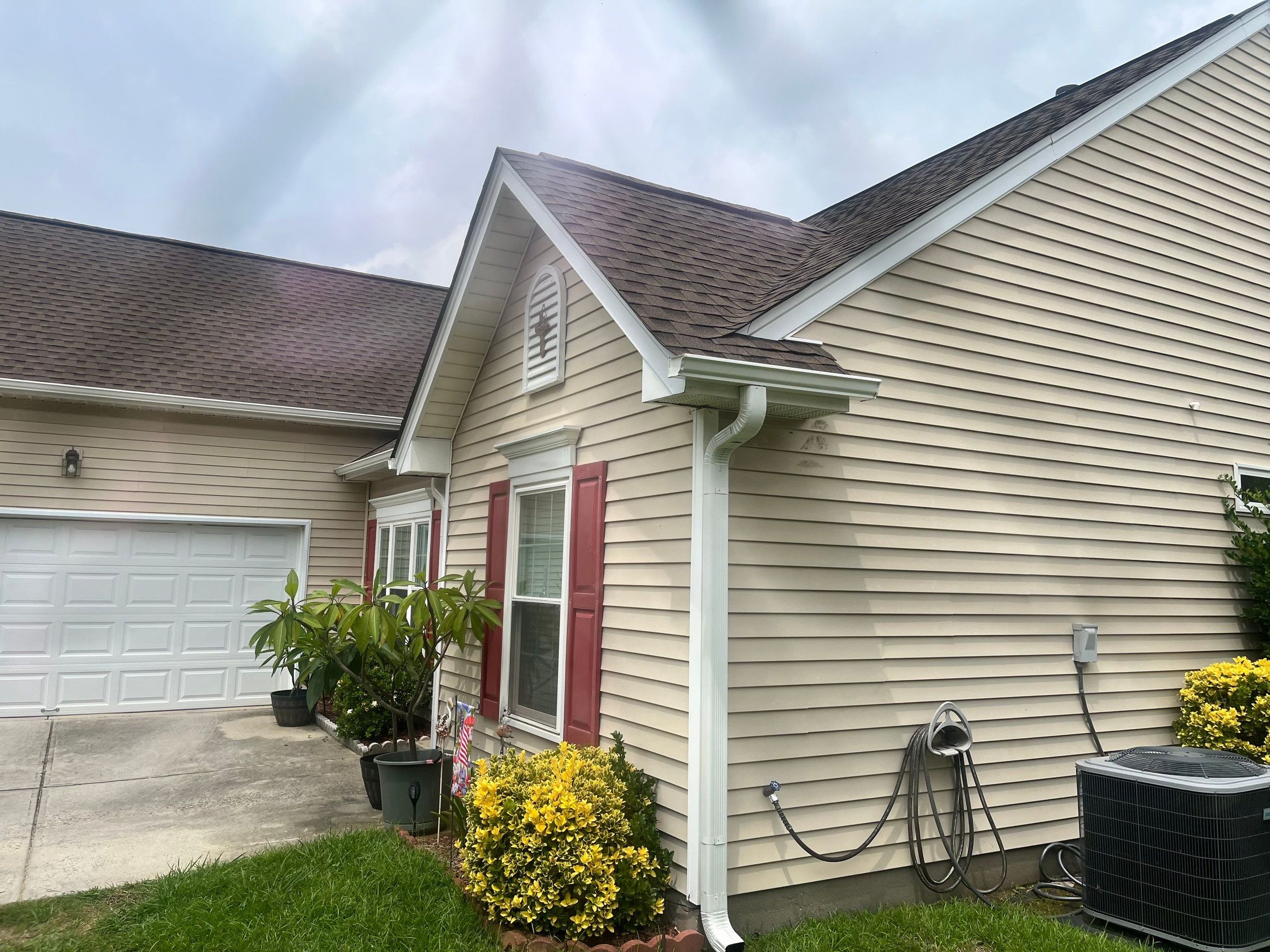
1. Clean gutters and downspouts now, then again after leaf drop starts. A gutter full of summer debris fails in the first hour of a remnant storm. Water backs up under the drip edge and into the fascia and soffit. This is the cheapest, highest-value item on the list.
2. Trim branches overhanging the roof. Anything within reach of the roof in a wind gust should come back. Dead or leaning trees near the house deserve an arborist's opinion before the season, not after the first named storm forms.
3. Fix loose, lifted, or missing shingles before the wind finds them. Walk the perimeter and look for tabs that sit up, edges that flutter, or exposed nail heads. Each one is where a gust gets a grip.
4. Check flashing and sealant at every penetration. Chimneys, vents, skylights, and wall intersections are where long-duration rain gets in. Dried, cracked sealant that survives a thunderstorm fails under six hours of driving rain.
5. Photograph your roof and exterior while it is dry. From the ground, every side, plus close-ups of anything you can see. If a storm damages your roof, dated photos of its condition beforehand make an insurance claim dramatically cleaner.
6. Know where your water shutoff and electrical panel are, and have tarps on hand. If a limb comes through, a tarp over the breach until a roofer arrives prevents most of the interior damage.
What we look for on a pre-season inspection
A professional pre-season inspection covers the items you cannot see from the ground: the condition of seal strips on aging shingles, ridge and edge integrity, flashing condition at every penetration, gutter attachment and slope, and the state of the roof deck at any past problem spots. We also flag the trees.
The point is not to sell a roof before a storm. Most pre-season inspections end with a short list of small fixes or nothing at all. The point is knowing your roof's condition before the weather tests it, on a schedule you control.
After the storm passes
Do this even if nothing looks wrong:
- Walk the property and look for shingle pieces, tabs, or granules at downspouts
- Look up at every edge and ridge for lifted or missing shingles
- Check ceilings for new stains over the following week, including after the next ordinary rain
- Check the attic for daylight or dampness if you can access it safely
- Photograph anything you find, with the date
If you see damage, or if a limb hit the roof, get it inspected and documented soon. Storm damage tied to a dated, named weather event is the cleanest kind of insurance claim, and that clarity fades with time. We wrote out how the claim process works in North Carolina if you find yourself there.
Get ahead of the season
A free pre-season inspection tells you exactly what your roof is going into hurricane season with, and most of the time the answer is a couple of small fixes or a clean bill. Either way you will have photos of your roof in good condition before the weather arrives, which is worth more than most people realize.
Call Top Flight Contracting at 704-269-8522 or request your free inspection today.