
After a storm like the one that crossed Union County on July 12, the same question comes up on every driveway: "How does the insurance side of this actually work?" Fair question, because most homeowners only go through it once or twice in a lifetime, and the process feels opaque from the outside.
We are not insurance adjusters and we do not interpret policies. What we do, every week, is inspect and document storm-damaged roofs across the Charlotte area and Union County, work alongside adjusters on those claims, and build the scopes that get roofs replaced. Here is the process as it actually unfolds, and what part of it is ours versus yours versus your insurance company's.
Step 1: A real inspection, before anyone calls anybody
The process should not start with a phone call to your insurance company. It should start with knowing whether you have damage worth a claim at all.
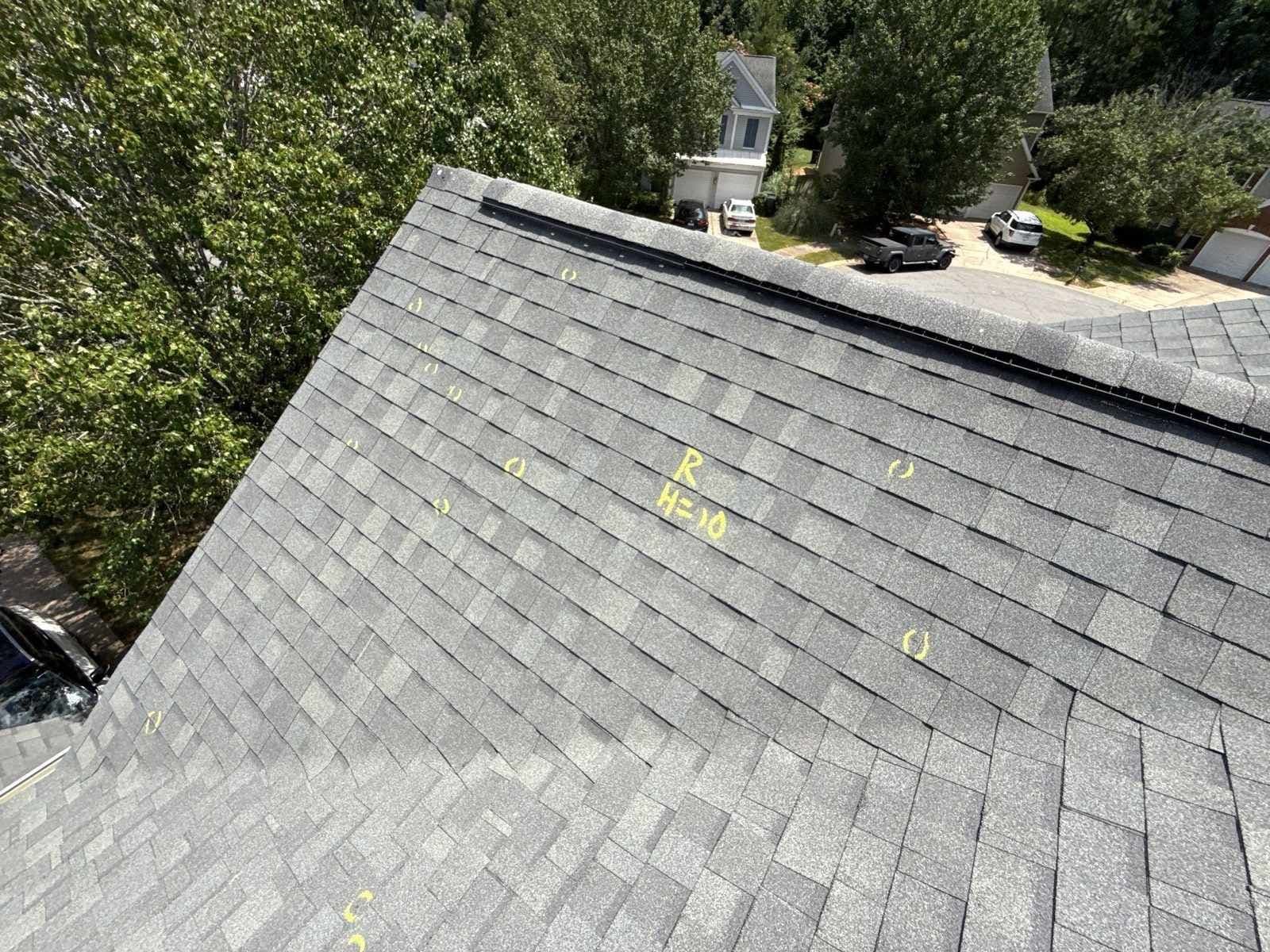
That is what a free professional inspection is for. We walk the roof, photograph everything the way adjusters expect to see it documented, hail bruises, creased or lifted shingles, dented soft metal like vents and flashing, and give you a straight answer:
- If the roof shows storm damage consistent with a claim, we tell you, and you decide whether to file.
- If it is normal wear, or damage too minor to justify a claim, we tell you that too, and you just saved yourself a claim on your record for nothing.
That second answer matters. Filing a claim that goes nowhere helps no one, and an honest contractor should be willing to say "your roof is fine."
Step 2: You file the claim, not us
If the damage is real, you call your insurance company or file online, tell them the date of the storm, and describe what was found. This part is yours: it is your policy and your claim. What we provide is the documentation, dated photos and an inspection summary tied to a specific weather event, so you are not describing damage from memory.
The insurer assigns a claim number and schedules an adjuster to inspect the roof.
Step 3: The adjuster meeting, and why your contractor should be on the roof too
In North Carolina you choose your own contractor. The insurance company does not pick who repairs your home, and you are free to have your contractor present when the adjuster inspects. We strongly recommend it, and we do this constantly.
Why it matters: the adjuster is on your roof once, for a limited time. A contractor who has already documented the roof can walk the adjuster to every mark, make sure nothing gets missed, and speak the same technical language on scope, slopes, damaged accessories, code items. Not adversarial, just thorough. Adjusters generally appreciate a contractor who has the damage already mapped.
Step 4: The scope and the numbers
If the claim is approved, the insurer issues a scope of work and a settlement summary. This is where homeowners usually hit the wall of unfamiliar terms: RCV (the full replacement cost), depreciation (the amount held back based on the roof's age), ACV (what the first check typically covers), and your deductible, which is your out-of-pocket share by law, an honest contractor never offers to "cover" or waive it.
We review the insurer's scope against what is actually on the roof. If the scope missed a slope, an accessory, or a code-required item, we submit a supplement with documentation. That back-and-forth between contractor and insurer is normal and expected, and it is how the final scope ends up matching reality.
Step 5: The build, and the final check
Once the scope is settled, we schedule the work, order materials, and replace the roof. After completion, the insurer typically releases the recoverable depreciation, the held-back portion, upon receiving the final invoice and completion documentation, which we handle.
Timeline for the whole arc, storm to finished roof, commonly runs a few weeks to a couple of months depending on adjuster scheduling and scope negotiation. The storm-week rush is real, so getting documented early matters.
One deadline worth knowing
Insurance policies set time limits for filing storm claims, and in North Carolina the window is limited, commonly around a year from the storm date, but it varies by policy, so check yours or ask your agent. The practical rule is simpler: damage documented within weeks of a dated, warned storm event is clean and easy to connect. Damage found two years later is a fight. If a storm crossed your neighborhood, get inspected soon, even if you see nothing wrong from the ground.
What this looks like when it goes right
We are working claims like this across Union County right now, including approved claims moving to build from the recent storms. The pattern on the ones that go smoothly is always the same: documented early, contractor present at the adjuster meeting, scope reconciled with photos instead of arguments, homeowner informed at every step and never pressured.
That is the job. You make the decisions, your insurer makes the coverage calls, and we make sure the roof is documented honestly and built right.
Frequently asked questions
Does filing a roof claim raise my insurance rates?
Rate decisions belong to your insurer and vary by company and policy, we cannot answer that for you. What we can do is make sure you only consider filing when the damage genuinely warrants it, which is what the free inspection is for.
Can I use any contractor for an insurance roof claim in North Carolina?
Yes. You choose your contractor. The insurance company pays based on the approved scope; who does the work is your call. Be wary of anyone who says otherwise, and of anyone offering to waive your deductible, which is illegal.
What if the adjuster denies the claim but the damage looks real?
Denials and partial approvals can be revisited. With thorough photo documentation, a reinspection can be requested. This is exactly why we document everything before the adjuster ever arrives.
Do you charge for storm inspections or claim documentation?
No. Inspections are free, and the documentation is part of the job if you hire us for the work. You are never obligated to file a claim or to use us after an inspection.
Get documented before the clock runs
If a storm has crossed your neighborhood this season, the smartest first step costs nothing: a professional inspection and an honest answer. We serve Charlotte, Union County, Lake Norman, and the surrounding metro.
Call Top Flight Contracting at 704-269-8522 or request your free inspection today.