
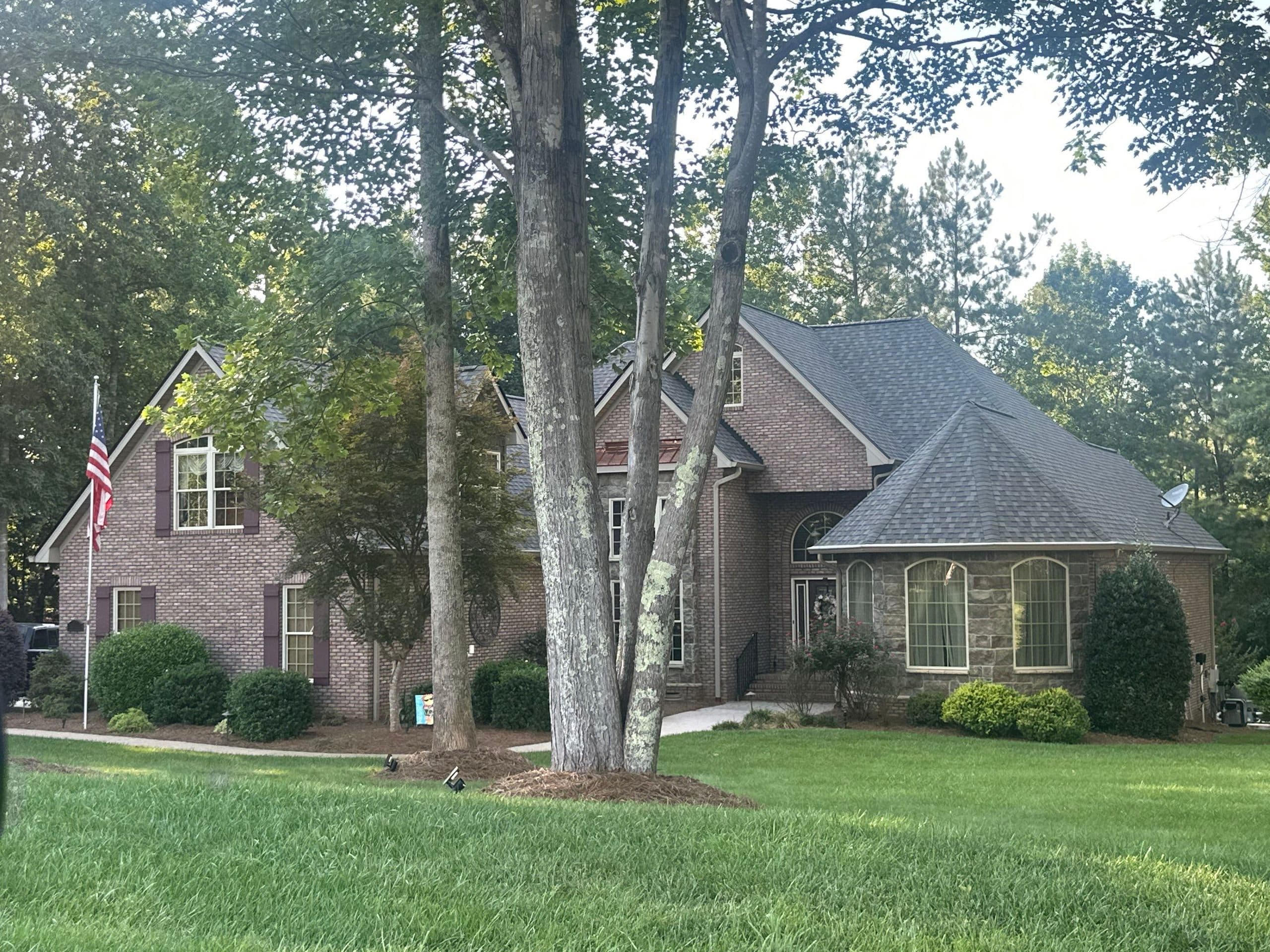
Your air conditioner runs all afternoon, the downstairs is comfortable, and the upstairs still feels like the inside of a car. Most Charlotte homeowners blame the AC. Most of the time the AC is fine. The problem is above the ceiling, in an attic that has been cooking since noon with nowhere to send the heat.
Here is how attic ventilation actually works, why it fails, and why a ventilation problem is a roof problem long before it is a comfort problem.
Quick answer
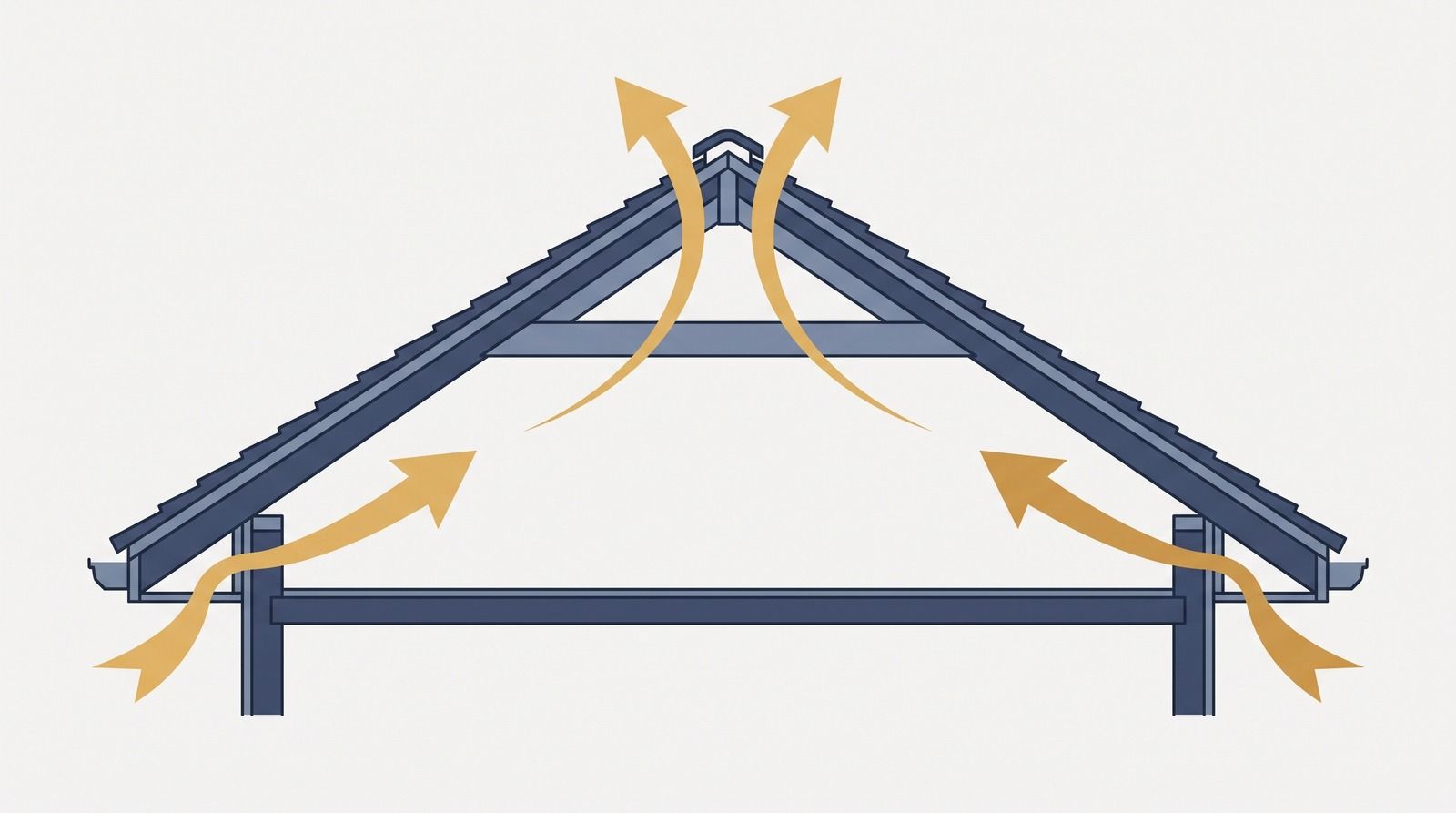
A hot upstairs is usually an attic ventilation problem, not an air conditioning problem. Sun on a roof heats the attic far above the outdoor temperature, and without a working path for that heat to escape, it radiates down through the ceiling into the rooms below. Proper ventilation means intake vents low at the soffits pulling in outside air and exhaust vents high at the ridge letting hot air out, so the attic continuously flushes. When either half is missing, blocked, or undersized, the attic traps heat, the upstairs suffers, cooling bills climb, and the shingles age from underneath.
What is happening above your ceiling
On a 95 degree Charlotte afternoon, a dark asphalt roof can push attic temperatures well past 130 degrees. That heat does not stay put. It radiates through the ceiling drywall and soaks into every upstairs room, and your air conditioner spends the rest of the day fighting it. The unit is not undersized. It is being asked to cool rooms that are being heated from above all day.
An attic that ventilates properly handles this on its own. Cooler outside air enters low, absorbs heat, rises, and exits high, over and over, all afternoon. The attic never gets a chance to become an oven.
Intake and exhaust: the two halves that have to work together
Attic ventilation is a system with two parts, and this is where most homes go wrong.
Intake happens at the bottom, through soffit vents under the eaves. This is where outside air enters.
Exhaust happens at the top, through a ridge vent along the peak, or through box vents, turbines, or powered fans on the roof. This is where hot air leaves.
Both have to be present and roughly balanced. The most common failures we find on Charlotte roofs:
- Soffit vents blocked by insulation. Someone added attic insulation and buried the intake. Air cannot get in, so nothing moves. Extremely common, invisible from the ground, and it undoes the whole system.
- Exhaust without intake. A ridge vent or attic fan installed on a home with no functioning soffit intake. The exhaust has nothing to pull from, so it pulls from the easiest source available: your conditioned air, through every gap in the ceiling. A powered attic fan on a house with blocked soffits can raise your cooling bill instead of lowering it.
- Painted-over or decorative soffit vents. Vents that look like vents but no longer breathe.
- Undersized ventilation for the roof area. Enough vents for a smaller roof, or a home that was added onto without adding ventilation.
The fix is never "add a bigger fan." It is getting both halves working together, which usually costs far less than people expect.
Ventilation and insulation are not the same thing
Homeowners often try to solve a hot upstairs by adding insulation. Insulation slows heat transfer through the ceiling, which helps, but it does nothing about the attic being 130 degrees, and if it is blown in carelessly it blocks the soffit vents and makes ventilation worse.
The two work together: insulation keeps attic heat from reaching your rooms, ventilation keeps the attic from becoming a furnace in the first place. A home needs both, and adding one while breaking the other is a very common way to spend money and end up hotter.
Reflective shingles: attacking the heat before it gets in
Ventilation deals with heat after it enters the attic. Reflective shingles reduce how much gets in. Standard dark asphalt shingles absorb most of the sun's energy and pass it straight into the attic. Solar-reflective shingles use specially coated granules that bounce more of that energy away, so the roof surface and the attic below run cooler on the same afternoon.
They cost somewhat more than standard shingles, and they are not a substitute for working ventilation. But if you are already replacing your roof, pairing reflective shingles with proper intake and exhaust is the most complete answer to a hot upstairs, and the combination is what we recommend on Charlotte homes where summer heat is the main complaint.
Why this is a roof problem, not just a comfort problem
This is the part most people never hear. Shingles are rated for a certain service life assuming the roof deck underneath stays reasonably cool. When an attic runs 130 degrees plus every summer afternoon, shingles are being baked from below as well as above. The result is premature aging: granule loss, curling, brittleness, and a roof that fails years earlier than its rating.
Some shingle manufacturers make adequate ventilation a condition of their warranty for exactly this reason. A ventilation problem can quietly cost you both the roof and the warranty that was supposed to protect it.
The winter side of the same problem
Ventilation is not only a summer issue. In winter, warm moist air from the house rises into a poorly ventilated attic and condenses on the cold underside of the roof deck. That moisture leads to mold, wet insulation, rusted fasteners, and rotted decking, all hidden until something sags or stains. The same airflow that flushes heat in July flushes moisture in January.
Signs your attic ventilation is failing
- Upstairs rooms noticeably hotter than downstairs on sunny afternoons
- Cooling bills that climb every summer with no change in usage
- Shingles curling, cupping, or losing granules well before the roof's expected age
- Frost, condensation, or damp insulation in the attic in winter
- Mold or a musty smell in the attic
- Ice buildup at the eaves after a winter storm
- Soffit vents you cannot see daylight through from inside the attic
What a proper ventilation assessment looks like
It takes a person in the attic and on the roof, not a guess from the driveway. We check whether intake is actually open, measure whether exhaust matches roof area, look at the deck and insulation for heat and moisture damage, and check how the existing shingles are aging. Then you get a straight answer: sometimes it is clearing blocked soffits, sometimes it is adding a ridge vent, sometimes the ventilation is fine and the issue is elsewhere.
We would rather tell you the fix is a few hundred dollars of vent work than sell you a new roof, and if your roof has been cooked past saving, we will show you why rather than ask you to take our word for it.
Frequently asked questions
Will an attic fan cool my upstairs?
Only if the attic has working soffit intake for the fan to pull from. Without intake, a powered fan pulls conditioned air out of your living space through ceiling gaps and can raise your cooling bill. Fix intake first, then decide whether a fan is even needed.
How do I know if my soffit vents are blocked?
From inside the attic, look toward the eaves. You should see daylight through the soffit vents. If insulation is packed against the roof deck at the edges with no gap, the intake is blocked.
Does poor ventilation really shorten a roof's life?
Yes. An attic that runs far above outdoor temperature bakes shingles from underneath, causing early granule loss, curling, and brittleness. Some manufacturers require adequate ventilation for the warranty to apply.
Is ridge vent better than box vents or turbines?
A continuous ridge vent generally provides the most even exhaust along the entire peak, which is why it is the standard on most new roofs. Box vents and turbines can work fine when there are enough of them and intake is adequate. The right choice depends on the roof shape.
Can you fix ventilation without replacing the roof?
Usually, yes. Clearing soffits, adding intake vents, or cutting in a ridge vent are all done on an existing roof. Ventilation is typically addressed during a replacement too, which is the ideal time to get it right.
Get your attic checked before next summer bakes another year off your roof
If your upstairs is fighting the AC every afternoon, the cause is probably above the ceiling and it is probably fixable for far less than a new roof. We inspect attics and roofs together for free and tell you exactly what we find.
Call Top Flight Contracting at 704-269-8522 or request your free inspection today.