
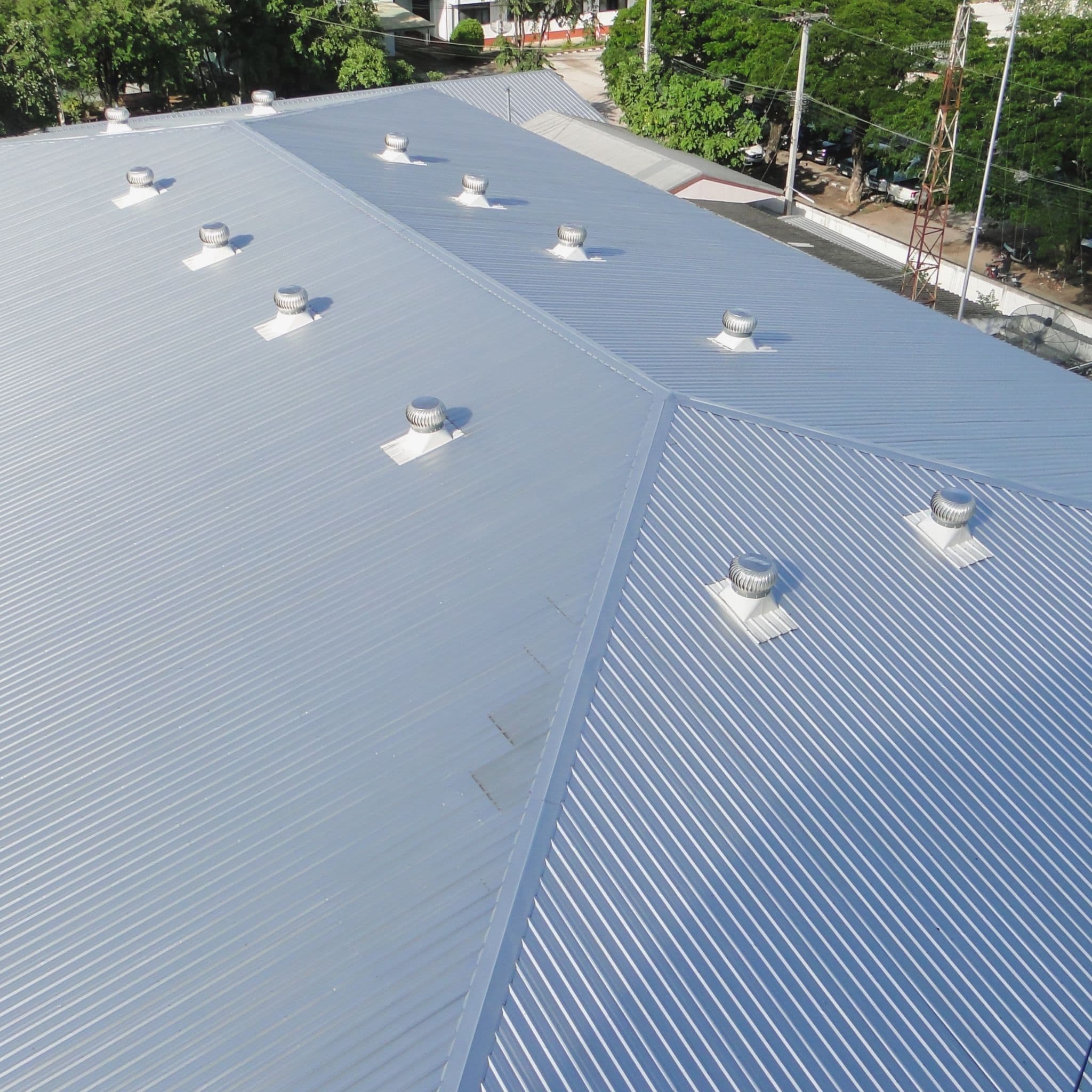
A shingle roof gets help from gravity. A flat roof gets none, and in Charlotte that difference decides whether your roof lasts twenty years or leaks in five.
If you own a commercial building, a strip center, or a home with a flat porch roof or addition, you already know your roof does not behave like the shingle roofs around it. Flat roofs are their own discipline. They fail differently, they get repaired differently, and the difference usually comes down to details most people never see.
Here is a straight explanation of how low-slope roofing works in the Charlotte area, what the membrane options actually are, and how to tell whether yours needs a repair or a replacement.
Quick answer
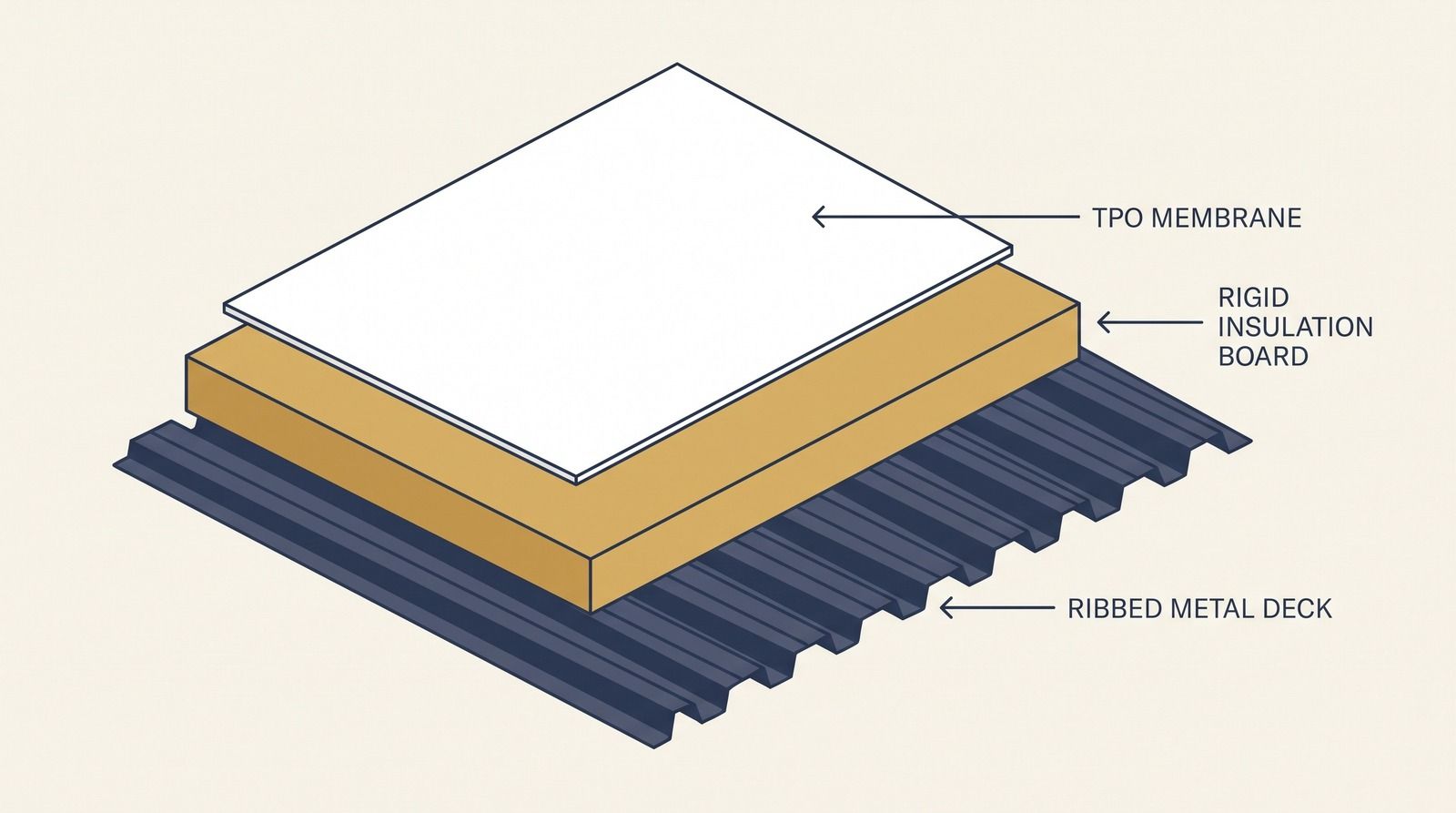
Most commercial flat roofs in Charlotte use one of three membranes: TPO, EPDM, or modified bitumen. TPO is the current default, a white single-ply membrane with heat-welded seams that reflects sunlight and lowers cooling load. EPDM is black rubber, durable and often cheaper up front, but it absorbs heat. Modified bitumen is asphalt-based and handles foot traffic well, which makes it common on smaller residential flat sections. The warning sign that matters most on any of them is ponding: water still standing about 48 hours after rain means a drainage, insulation, or structural problem worth inspecting.
Why flat roofs fail in the Carolinas
A shingle roof gets help from gravity. Water hits it and leaves. A flat roof, which is really a low-slope roof pitched just enough to drain, has no such help. Every seam, every flashing detail, and every penetration is a potential entry point, and water has time to find them.
Three local conditions do most of the damage:
Heat cycling. Charlotte summers push rooftop surface temperatures far above the air temperature, then cool them off overnight. That daily expansion and contraction works seams and fasteners loose over years. It is the single biggest reason membranes age faster here than the brochure suggests.
UV exposure. A flat roof takes direct sun all day with nothing shading it. UV degrades membranes, dries out sealants, and chalks surfaces.
Downpour volume. Carolina thunderstorms dump water fast. A drainage system that handles a slow rain fine can back up in a fifteen-minute cloudburst, and standing water is where flat roof problems begin.
The three membrane types, plainly
TPO. The current default for most commercial work. It is a single-ply membrane, usually white, and that white surface reflects sunlight instead of absorbing it, which lowers cooling load and reduces the heat cycling that ages the roof. Seams are heat-welded, which makes them strong when they are done right and a liability when they are not. Installer skill matters enormously with TPO.
EPDM. Black synthetic rubber, one of the longest-proven low-slope materials. It is durable, flexible in temperature swings, and often less expensive up front. The tradeoff is that black absorbs heat rather than reflecting it, which raises cooling costs on a conditioned building and drives more thermal movement.
Modified bitumen. An asphalt-based system installed in layers, often torch-applied. It handles foot traffic well, which matters on roofs with HVAC units that need servicing, and it is a common and sensible choice for smaller residential flat sections like porch and addition roofs.
There is no universally correct answer. The right membrane depends on the building, the budget, how much foot traffic the roof takes, what is already up there, and whether the space below is conditioned.
Ponding water is the warning sign that matters most
If water is still standing on your roof roughly 48 hours after the rain stops, that is ponding, and it is a problem rather than a quirk. Ponding water adds weight, accelerates membrane breakdown, magnifies UV damage, and turns a small seam flaw into an active leak.
Ponding usually points to one of three things: drains or scuppers that are clogged or undersized, insulation that has compressed or gotten wet and lost its shape, or structural deflection in the deck itself. The fix depends on which, and figuring out which is the whole job of a proper inspection.
Walk out after the next hard rain and look. Standing water two days later is worth a phone call.
Repair or replace
Flat roofs are more repairable than shingle roofs, and a good contractor will tell you when repair is the right call.
Repair usually makes sense when: the membrane is generally sound and the problems are localized, seams or flashing details have opened up, damage is around a specific penetration such as a vent or HVAC curb, or the roof is well inside its expected service life.
Replacement is usually the honest answer when: the membrane is broadly brittle, chalking, or shrinking, leaks keep appearing in new places rather than the same place, the insulation below is saturated (patching over wet insulation traps the problem), or the roof has been patched repeatedly and each repair buys less time than the last.
That last pattern is the one to watch. When repairs stop holding, you are no longer maintaining a roof, you are renting time on one.
What maintenance actually prevents
Low-slope roofs reward attention more than any other roof type. A twice-yearly inspection plus keeping drains clear is genuinely most of it. What that catches: seam separations while they are still small, flashing that has lifted at a curb or wall, punctures from foot traffic and service work, sealant that has dried out at penetrations, and debris headed for a drain.
None of those are expensive to fix when they are found early. All of them are expensive after they have been leaking into insulation for a season.
How flat roof pricing works differently
Shingle roofs price fairly predictably by square footage and material. Flat roofs vary more, because the cost is driven by things you cannot see from the parking lot: how many penetrations and curbs the roof has, whether the existing insulation is dry and reusable or saturated and needing replacement, whether old layers have to come off or can be covered, what the drainage needs, and access, since getting material onto a roof with no easy path costs real money.
That is why flat roof quotes from different contractors can look so different from each other. They are often not pricing the same scope. A quote worth trusting spells out the membrane and thickness, what happens to the existing layers and insulation, how many penetrations and details are included, drainage work, and the warranty, both manufacturer and workmanship.
Frequently asked questions
How long does a TPO roof last?
Service life depends on membrane thickness, installation quality, and how well it is maintained. Heat-welded seams done correctly are the single biggest factor, which is why installer selection matters more on TPO than on almost any other roofing product.
Is standing water on a flat roof normal?
Brief standing water right after heavy rain is normal. Water still standing about 48 hours later is not, and it points to a drainage, insulation, or structural issue worth inspecting.
Can a flat roof be repaired instead of replaced?
Often, yes. Localized seam, flashing, and penetration problems on an otherwise sound membrane are repairable. Broad brittleness, saturated insulation, or leaks appearing in new places each season usually mean replacement is the more honest answer.
Do you work on commercial flat roofs in Charlotte?
Yes. Top Flight Contracting handles residential and commercial exterior work across the Charlotte metro, including low-slope and flat roof systems. We inspect, document what we find with photographs, and give you a straight recommendation, including telling you when a repair will do.
My house has a flat porch roof. Is that the same thing?
Same principles, smaller scale. Residential flat sections over porches, additions, and dormers use the same low-slope systems and fail for the same reasons, and they are frequently the source of leaks blamed on the main roof.
Get a straight answer on your flat roof
Whether you manage a commercial building or you have a flat section over a porch that keeps leaking, the first step is the same: someone who knows low-slope systems needs to get up there and look at the drains, seams, and details.
We inspect for free, photograph what we find, and tell you honestly whether you are looking at a repair, a maintenance plan, or a replacement. Property managers: ask about scheduled twice-yearly inspections, which is the cheapest flat roof money you will ever spend.
Call Top Flight Contracting at 704-269-8522 or request your free inspection today.